Description
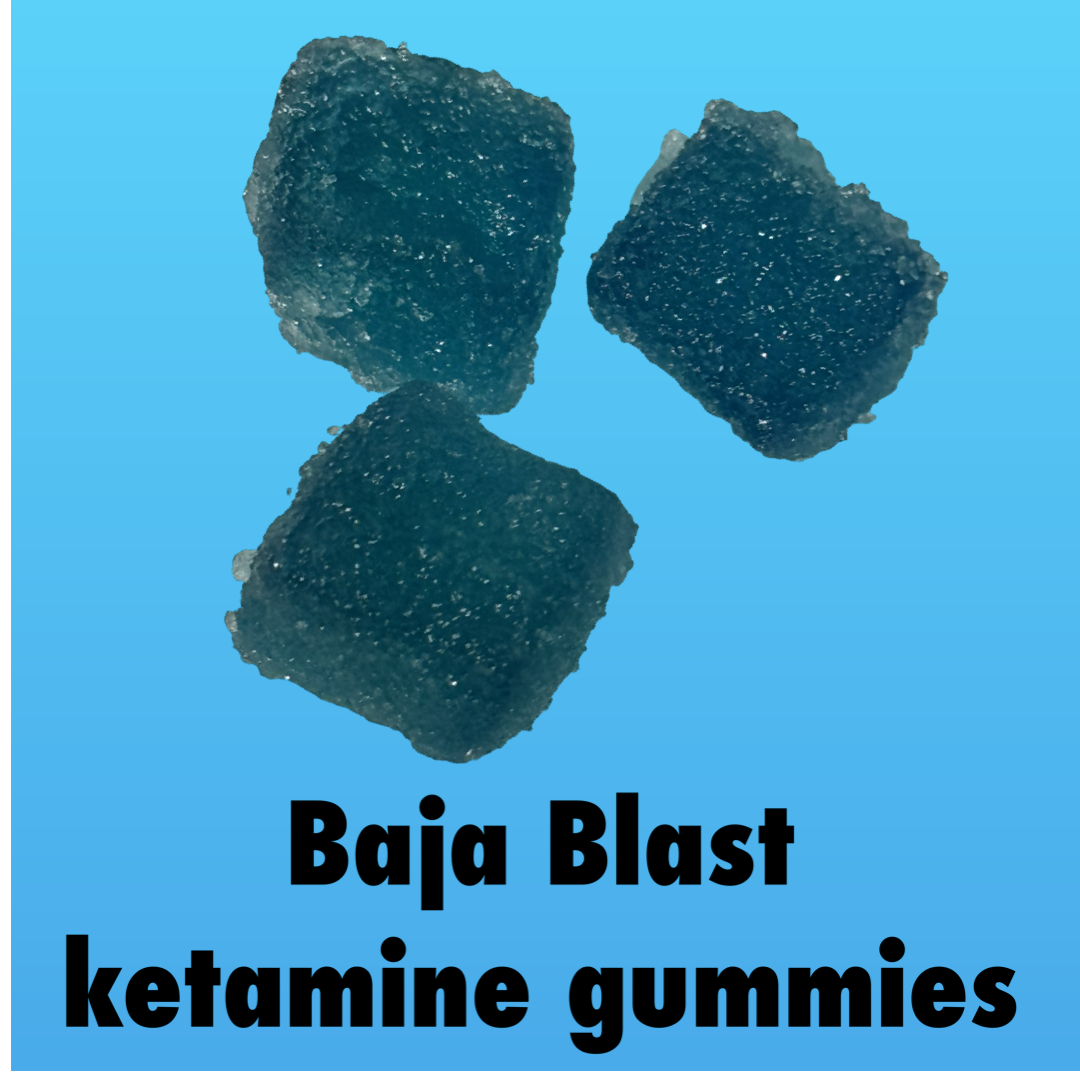
Pictured are Ketamine gummies! These come in packs of ten in assorted flavors. Each gummy contains 35mgs of Ketamine, and each bag has ten gummies of assorted flavors as mentioned. For more information on this product please email us.
What is known (and plausible) about low-dose ketamine
Ketamine is FDA-approved as an anesthetic. Its use in lower doses (often called “subanesthetic” or “low-dose ketamine”) is being researched and used off-label for:
- Treatment-resistant depression (TRD)
- Reducing suicidal ideation
- Chronic pain (especially neuropathic pain)
- As an adjunct in psychiatric treatments (e.g. ketamine-assisted psychotherapy)
These uses rely on ketamine’s effects on NMDA (N-methyl-D-aspartate) receptors and downstream modulation of glutamate, synaptic plasticity, and neurotrophic factors.
Some key observations:
- Ketamine can produce rapid antidepressant effects (often within hours), in people who have failed conventional antidepressants.
- These effects tend to be transient (days to a week or two) unless maintained by repeat dosing or other interventions.
- There is some evidence ketamine can acutely reduce suicidal thoughts more rapidly than standard antidepressants.
- In chronic pain, low-dose ketamine can moderate central sensitization, “wind-up” phenomena, and NMDA-mediated pathways of chronic pain.
- Ketamine may promote synaptogenesis (formation of new synaptic connections), possibly improving neural circuits impaired in depression.
So, in theory, a low dose like 35 mg might be aimed at eliciting some of the psychiatric/neuromodulation or analgesic benefits without full anesthesia or dissociative effects.
What “benefits” one might hope for from 35 mg ketamine gummies (if safe and effective)
If the 35 mg dose is well-absorbed and timed appropriately, potential benefits (based on extrapolation from low-dose ketamine studies) could include:
- Mood / depression improvement
- A rapid antidepressant lift, particularly for individuals with treatment-resistant depression
- Reduction in suicidal thoughts or ideation, in acute settings
- Enhanced synaptic connectivity / neuroplasticity
- Possible “resetting” or rebooting of neural circuits damaged or “stuck” by chronic depression or stress
- Improved cognitive or executive functioning (though evidence is mixed)
- Pain modulation
- Reduction in neuropathic pain, chronic pain arising from central mechanisms
- Diminished central sensitization
- Adjunctive contribution to psychotherapy
- In ketamine-assisted psychotherapy, the altered state induced by ketamine may facilitate psychological insight, emotional processing, or deeper therapeutic engagement
- Faster onset than conventional therapies
- Because conventional antidepressants (SSRIs, SNRIs, etc.) may take weeks to act, ketamine’s more rapid action is a major interest